Are we in a Wile E. Coyote stock market?

Why play Wile E. Coyote?
Why not play Road Runner?

While I’m more Runner than Coyote, I did play TSLA rather conservatively when selling covered calls, in other words I did not sell calls on my TSLA LTBH position. Once I got my Covered Call Roll Selector working I changed tactics. It also happened at a TSLA Coyote peak, December 2024!

19 trades rolling down from strike $510 to $265 and back up to $375 (this week). TSLA closed at $395.94 on Friday. If called that would be a loss of $2,100 per contract vs. $6,384 collected in option premiums. I checked future roll numbers. I can continue to roll up to protect the stock at near zero premiums. At some point TSLA will reach another peak and I’ll resume collecting premiums.

One can do this only with stocks that bounce back, stocks backed by animal spirits, by current darlings, now in the AI industry. For selling covered calls TSLA is better than NVDA. BTW, the rolls should be to the nearest date possible.

The Runner Captain

2 Likes

Based on some of the rulings I’ve seen so far, the administration only has to scare half the wits.

9 Likes

Are you talking about Tricolor Auto? I am not able to find your post, if you can post a link that will be useful.

Unlike housing crisis, it will be limited and contained. However, keep an eye on $CVNA I think they will be impacted. Luck may have it, $KMX recently started sub-prime lending :frowning:

1 Like

$TSLA is more volatile than $NVDA. I understand your primary goal is harvesting premium, and you benefit from the vol. But the vol also indicates significant risk.

2 Likes

Something like this?

3 Likes

My favorite options book:

One must learn to manage volatility, it’s not for everybody. I keep on saying, “Buy only stocks that will bounce back.”

The Captain

1 Like

When you are doing covered call, or Naked put, you are just taking all the downside risk, for a limited premium. How is this managing risk?

When you say buy only stocks that can bounce back is same as " buy only stock that can go up"… They are nice sounding words and not really managing the risk. Say for ex: god forbids, tomorrow Musk vanishes from earth, what are you chances of $TSLA bouncing back??

2 Likes

I’m still waiting for someone to kindly post this list of stocks.

7 Likes

This would be true if investing were defined as just one trade. Investing is a process. Gambling casinos are good illustrations. At roulette the casino is gambling it could lose 70 times the bet amount on each spin of the wheel but in the long run (the process) it earns the vigorish. But there is more, the bet size is limited. Each game has its safeguards, like prohibiting card counters at Black Jack.

The process is how risk is managed.

First if all, you misquoted me, “will” not “can.”

Any stock “can” but stocks that “will” have a selection process based on business fundamentals. In the case of Tesla, my question has been, “who can best monetize AI?”

Reminds me of my college days, a fellow student would have replied, “A meteor could hit you on the head and kill you.”

The Captain

1 Like

What you are describing is not a process, something you assume is a process. Individual stocks sometimes never come back. Here is an example, if you have applied this strategy on $PYPL, and entered it not necessarily at the top, even at $120, you would not have recovered your money, or even a break-even in 3 years. $PYPL in the 3 years increased its revenue, profits and even bought back some shares. This also, assume you will not have any whiplash, of stocks going down suddenly turn around and along the way adding to your losses. You can even get some workable trades on a “trending” stock whether it goes up or down but the stocks that are volatile wipes most of the gains.

The analogy to casino is also fails, because, casino never has to make money on the same player, not even on the same table. The casino makes their money on 1000’s of betters on 100’s thousands of bet’s. On a single stock you are going to be able to make only 52 bets at the most.

You are confusing luck with risk management.

Again, you are confusing. You are applying a mechanical approach to stock selected on “fundamentals”. I am not even questioning which stock it is, but since you made the point, so far $NVDA monetized, and there are other companies that have monetized, I am yet to see $TSLA make any real money on AI. This is a $100 B company with falling revenue with $1.3T valuation. This is not some utterly cheap company.

How many companies have offered pay packages to their CEO that runs in billions and now it could go to $1 T??? The reason Musk can demand such a compensation package and the reason the board offered, because both know without him $TSLA is nothing. $TSLA is a bet on the jockey. You can be very bullish on their prospects, but at least be clear on the risks.

I am all for taking risks, here is my trading account performance details…

If you see in this, how a sudden volatility caused me a significant drawdown. That was because of the put position I had. The primary reason I am showing you this is, significant drawdowns are part of the game, but you can climb back only if you have good risk management, capital and a process.

I have been in this game for a long time. It took me significant time to understand the risk management. Here are few very high level,

  • When you are writing/ selling an option (this certainly includes covered calls) you are writing an insurance, you have to be well capitalized
  • When you are selling an option, you are trading limited upside for significant downside
  • Individual stocks, sector can have bad month, bad year, bad decade, you need to be diversified, I typically diversify across 30 to 50 names and 70 to 100 positions.
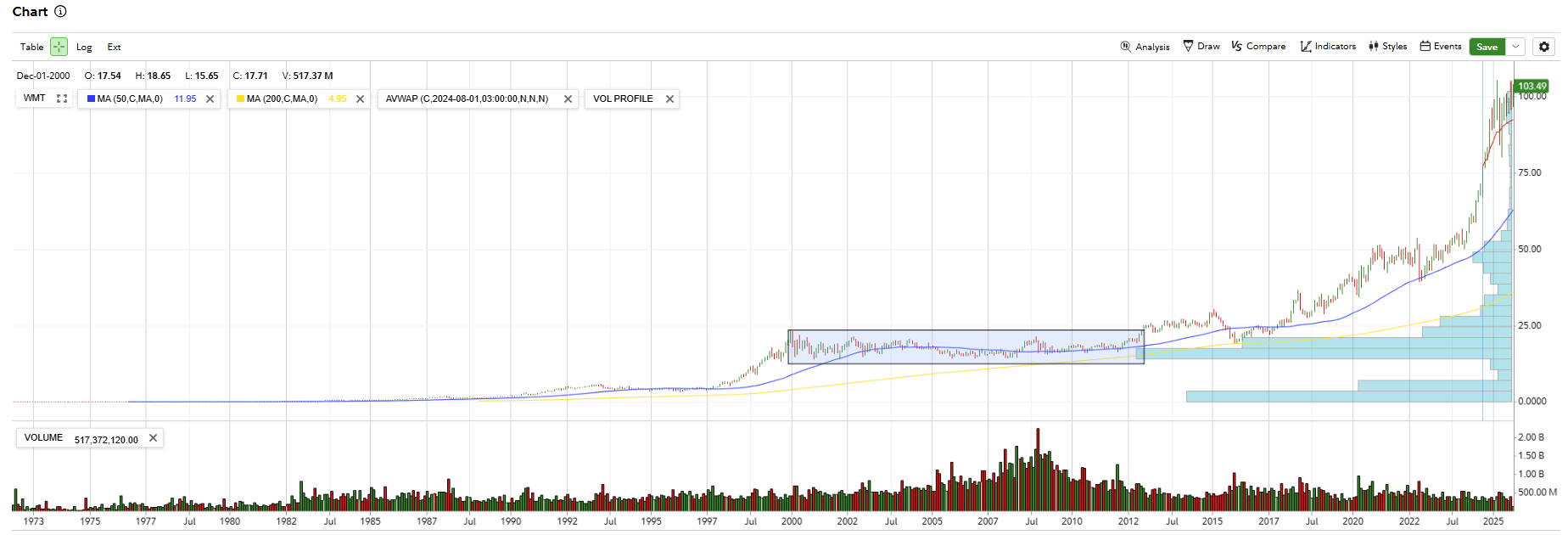
  • The stock selected is based on a criteria, not on “fundamentals”. A stock can fall 50% and take decade to recover, all the while it can do extremely well business wise. When in doubt see from 2001 to 2015 $MSFT, $WMT. The 12 year period $WMT, doubled its revenue, and maintained its margin, significantly grew its business, profits, cash flow, the stock never recovered to the prior peak. These are successful companies, if you had the misfortune of selecting a company that is not successful..

  • When selling an option, you need to protect your downside, you cannot have a 50% drawdown and expect to recover it back immediately or even in a year or two.
  • Asymmetric gains are achieved by owning options, not by selling options
  • Protect your gains; To given an example, I am in $SLV from $28, along the way I took profits and moved it to $30, I still own some of those long calls, but moved it to $35, then recently to $38. Along the way, I took significant profits, everytime I move it I lose a little on bid-ask and option premium, but it is one of the key risk management lesson I learned, protect your gains. Now, I have already taken 7x of my original capital, and for some reason, $SLV falls to $30, I will not be giving back all my gains.
  • Last but not least, be willing to take loss. When your thesis, whatever it is, has not played, you should be able to close and move on. You don’t have to make money on the stock you lost. Time and capital are resources, don’t lock them up on a unfavorable setup, don’t try to repair a failed trade, move on. Longevity is achieved by having a robust risk-management process, not by having a superior stock picking skill
3 Likes

At the top of the market?

Good luck

The below is a $ADBE stock chart. The first decline from $700 to $270 is due to the entire tech sector sell-off during 2022, $ADBE bottomed along with other stocks and turned around. However, the decline that started on 2024 is due to the competition eating their moat. During this period, revenue, profit increased, company bought back shares too!!! Now in my view $ADBE is facing secular challenges with Nano banana, and Flux Kontext, doing much better job of editing the images. Market has essentially took out $100 B from $ADBE and gave it to LLM companies.

If you look at below chart, you will see the implied volatility is high, currently it is almost double of the actual realized volatility. What most option traders are missing is, when you have imp volatility of 50%, that means the stock can go down 50%. When you see the imp volatility is double of actual volatility, market is expecting the stock to make wild moves. Trying to do covered call on this name would be wiping out your capital, and will be difficult to recover.

This is where a strong process, willing to accept losses, diversification comes into play.

1 Like

Long ago, I read Liar’s poker. There are many iconic quotes and lessons from that book. But one nugget that stayed with me is, when they wanted to buy a bond, and the bond is moving in certain direction, the trader will go out sell the bond and when the sellers are exhausted, he will buy. I read it then, and it stuck with me, but it took me more than 15 years to understand it.

You need to trade the market and cannot fight it. You have to be nimble and be ready to go opposite direction, if the market demands it. This is very different from “investors”. Where they just buy or sell. Trader, doesn’t care, he trades what market offers. This also, involves temporarily abandoning your position, even taking loss, until the setup is favorable for you.

1 Like

I didn’t. I avoid banks and other financial businesses as too risky.

TSLA did that to me since December 2924 and I’m still ahead in Tesla.

TSLA is volatile and it has yet to wipe out my gains.

Who says I only trade calls on just one stock?

You are certainly entitled to your opinion.

Mechanical? How so? Not only have I studied accounting but most of my professional life as been dealing a huge variety of businesses as a System Analyst, a business hardware sales rep, as a website developer with clients on several continents, as a Management Consultant, as an insurance sales rep, and as a student of business and investing not to mention my family’s various businesses. My clients include US Steel and GM, and my employers include IBM, NCR, and Colgate Palmolive.

My early assignments were often about inventory management. I thought I knew a lot about inventory but every new client showed me that inventory management was very much industry specific, an iron ore mine is very different from a car assembly plant, from a shoe factory, from a spare parts business. Business is not just numbers, it’s people.

A truck spare parts customer taught me an interesting lesson. Truck owners/drivers are pretty good credit risks, not because they have pristine credit ratings. They extended credit to new customers for the first sale. To extend further credit the truck owners had to pay up previous debt. No credit, no parts, no trucking. They paid up. As a management consultant I liked to visit the field where my customers operated. Tracking down tardy truck drivers was quite an adventure.

How, exactly does the above relate to trading the stock and its derivatives? BTW, do you know my TSLA cost basis? Give it a guess.

$–9.02 on stock trading
$-25.19 on option trading
Because my calls are ITM, deduct $20.00
Net NEGATIVE $-14.21 per share

I stopped trading puts over a decade ago, too risky!

Who says I don’t?

Half a century? Funny thing, long before I started investing I watched my dad reading the stock market pages in the daily newspaper and taking notes on index cards. I could not imagine anything as boring as that.

Some 35 years ago I decided to visit Las Vegas to see what the excitement was all about. A good friend asked me how much I was going to gamble. I’m not a gambler but casinos are fascinating. I replied not much. He insisted that the only way to really live the experience was to bet a significant amount. So I did and lost some $800. Las Vegas was a dud but instructive. They had little pamphlets about the various games and the advisory to play only for entertainment. I took the whole set home for further study. Las Vegas was instrumental in my new view of the stock market, Play the role of the House, not the Gamblers. The games are all rigged in favor of the House. One can do that selling covered calls. What one needs is a tool to find the best calls to sell. There are hundreds of stocks and option chains list hundreds or even thousands of option per share. There is no way to find the best to sell without a proper tool. I had some spreadsheets but they are tedious and error prone. Over the years I had developed a web-app to manage my portfolio and I added a section to manage covered calls. What was notable is how my performance improved as I went from eyeballing to simple spreadsheets to fancier ones, to the Covered Call Selector web-app which is a spreadsheet on steroids. Not only does it pick the best option in an option chain but it compares them across the various stocks being researched. This mechanical aide is a fantastic helper.

Being able to find the most productive calls to sell reduces the risk considerably. Just math, mechanical math.

Before I forget, I added a Roll Selector that is a great help in navigating the inevitable volatility of the stock market helping rolling up or down as the circumstances warrant.

The Captain

Put and covered call, same risk profile, same return profile, no difference.

You talked about TSLA fundamentals and a AI beneficiary… and your answer is you made money on trading the stock… Are you sure you are not confusing the topics?

You argued initially it is not mechanical… and selecting optimal strike doesn’t change the risk profile.

If the process works for you great. In any case, I wish you good luck.

2 Likes

Fascinating conversation guys, and further confirms for me that I not only have no interest in trading but also zip talent.

Thanks!

6 Likes

David,

Ditto!

The house is only a casino if you play it as a loser.

Yes, that’s what the theory says. Reality says different.

Selling covered calls is a complex process. You need an understanding of how covered calls work. You need to find the stocks that make for good trades. You need to find the best calls to sell. You need to find the best rolls. You need to understand volatility and chart reading. You need patience.

Lady Luck is Nice! It’s good to have her on your side…

…but Lady Luck is fickle.

The Captain

True.

I’m reminded of our recent discussion of how a market maker would be willing to buy your calls because they can earn risk-free returns (in the volatility sense) on the stock’s upside that you give up to the call buyer and that you are willing to finance by providing your capital to go long the stock.

Same for puts, they are happy to buy the volatility and delta hedge by going long stock and realize volatility p&l.

Market makers are happy to buy that volatility from you for the right price that keeps them in business and happily profitable.

The options business is great for Citadel and friends.

Could be but why would you or I care? They won’t pay your or my bills. I find the idea of how the other side fares to be a waste of time. I need to pay my bills.

The Captain

2 Likes