Farley has announced his latest brain phart: retooling Louisville Assembly to build a “mid size” EV pickup. He claims huge gains in assembly efficiency. He claims it will sell for $30,000.
On assembly efficiency:
Ford said its Universal Assembly Process will make efficiency key to building these new EVs. The process transforms the traditional single-row assembly line into an “assembly tree,” where three subassemblies run in parallel before merging at a later point.
“Assembly tree”? Ever see how a body on frame vehicle is built? The frame is built up on one line, the body is built up on another line, then the two are bolted together.
The first product coming from that platform — dubbed the Ford Universal Platform — will be a $30,000 four-door electric pickup
The Maverick hybrid pickup started at $20,000, in 2022. Folks said “great”, but try and find one to buy. Now, there are plenty of Mavericks, but, in only four years, Ford escalated the price nearly 50%.
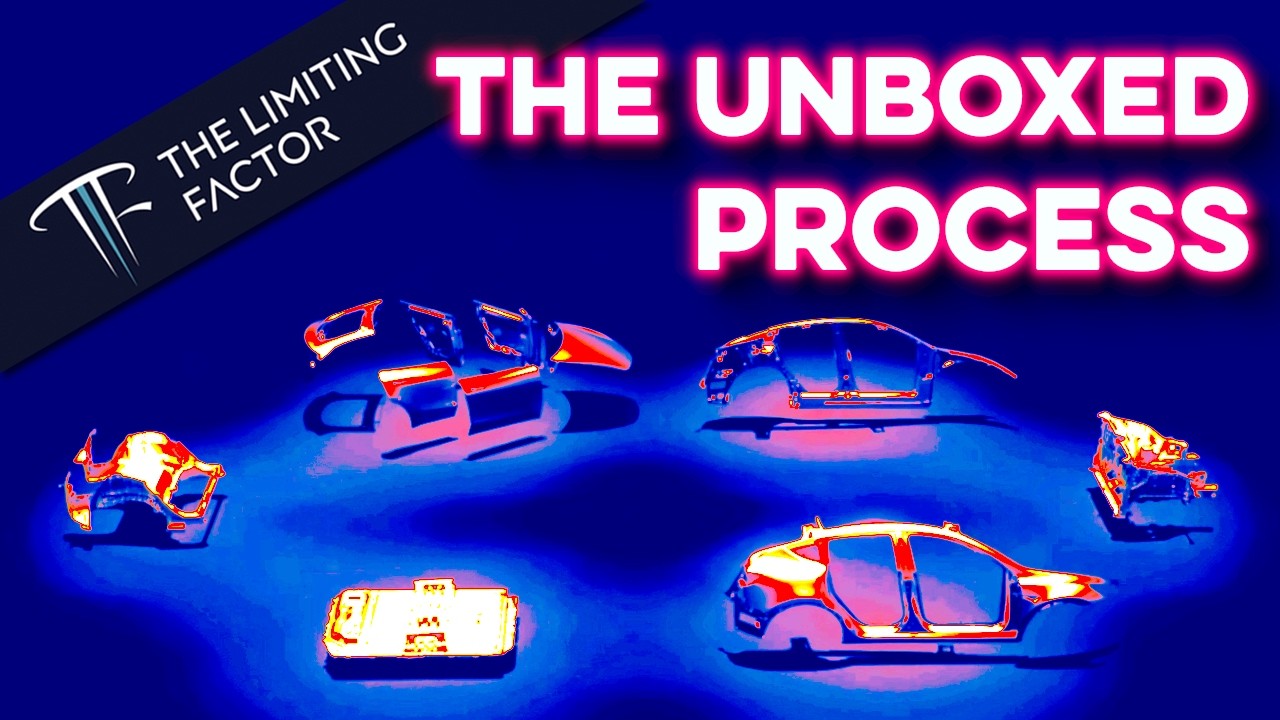
The Universal Assembly Process sounds like Tesla’s Unboxed Process which was supposed to be used to build the new low cost, mass market model which has not yet happened. Maybe they’ll use it to build the RoboTaxi
When I first heard of it I had the same reaction, what was the real innovation? My best guess is that new models are going to be designed to be more “unboxed,” more parallel manufacturing (the Ford tree?), for final assembly which would reduce the build time making the factory more efficient.
Not much more has been released by Tesla except that some refreshed models use the Unboxed Process PARTIALLY. EVs are disrupting cars in more ways than one.
Ford’s “skunk works” hired an engineer away from Tesla.
So, will there be a “theft of intellectual property” suit from Tesla coming? Henry got his original assembly line process idea from the meat packing industry. But Ford is copying production processes from Tesla, a direct competitor?
Here’s an article about the production process. They are bragging about a 20% headcount reduction vs the staff used to built the ICE and hybrid Escapes that plant has been building. They are also bragging about a 20% reduction in part count, but the article does not make clear if that is in comparison to an ICE vehicle, or another EV.
The batteries will be from the plant being built in Marshall, MI, which uses technology from CATL. The batteries use a cheaper chemistry than others, to keep cost down….not surprisingly, the Ford brass is mum about range.
Bragging about headcount reduction is bad PR unless you are talking only to investors. Farley should borrow something else from Tesla, talk about design for manufacturing like Giga Casting, Octovalve, and stiff electric harnesses that accelerate the production cycle without talking about the implied headcount reduction.
Funny, a couple of years ago Farley was seen as Ford’s salvation. I guess Paradigm Shift is not so easy to execute.
Working for leading companies like IBM in my days or Tesla today is job security. Even if you get fired lots of companies want to hire you.
Yes, Farley, and a lot of “JCs” play to Wall St. That is behind the push, across most of the industry, to ramp up ATP and GP. Wall St almost always rewards “restructuring” programs that lay off thousands. McKinsey’s default recommendation to it’s clients is production headcount reduction. To “JCs” employees are a cost to be minimized, or, as I put it “expendable meat”.
There is some discussion in that article of the production process. I don’t follow Tesla to know how much of Tesla’s process it copies.
A recent teardown of the BYD Atto 3 in Japan has highlighted the impressive cost-saving strategies employed by BYD, leaving many industry experts in awe.
One of the most significant factors contributing to BYD’s cost-effective production is vertical integration. BYD manufactures most of its components in-house, including batteries, motors, and other critical parts. This strategy reduces dependency on external suppliers and cuts costs significantly
Another standout feature of BYD’s cost-effective production is the use of integrated components, particularly the 8-in-1 E-Axle. This innovative system integrates eight key components into a single unit: the motor, inverter, reducer, onboard AC charger, DC-to-DC converter, battery monitoring system, drive motor, and transmission.
BYD’s approach to design also contributes to its cost-effective production. The company focuses on using fewer parts and standardizing components across different models. This strategy reduces the complexity of assembly and minimizes the need for specialized tools and equipment.
I just watched one of those quickie-docs on Fox Business with Stuart Varne on Henry Ford and the Rouge River Complex, where he determined to do everything, and I mean everything. Make the glass, make the rubber, refine, smelt, and stamp the steel, paint the parts, make all the components in house, etc. It never paid off in quite the way that he hoped, but it was still a mammoth undertaking and gave him a great cost advantage over GM at the time.
There was substantial savings on some things, but on others he couldn’t match the mass production benefits of someone making for the entire industry instead of just a few thousand cars.
Overall there has to be a calculation on which things am I good at and which things do I want to have someone else be good at so I can get an attractive price. (Other factors like reliability, delivery, etc. also part of the decision, obviously.)
Some vertical integration is probably good, but sometimes you become captive to your own company’s inefficiencies but you have so much sunk cost you can’t let it go. I saw my share of that at Westinghouse.
PS: This is nowhere close to “the Model T” moment. That heralded a revolution felt around the world, spanning multiple industries and changing the face of every advanced country on the planet. Maybe this is Ford’s “Model A” moment, but even that might be a stretch.